

Travelling With Your Dog: Responsibility Is Not Optional

Travelling with your dog can be a beautiful and incredible experience. It can deepen your bond, create shared memories, build confidence, and expose your dog to enriching environments in a healthy way.
But here is the truth most people overlook:
Travel comes with a significant responsibility.
Travel amplifies everything – including stress.
As a professional trainer and behaviour educator, I observe canine behaviour closely in public environments. Recently, while travelling, I saw dogs who were calm, structured, and clearly prepared for the experience. That was encouraging.
I also saw:
Dogs confined in undersized crates
Overwhelmed dogs being pulled through crowds
Strangers touching dogs without consent
Dogs left alone in hotel rooms for most of the day
Dogs being hit by carts in stores while handlers were distracted
Dogs placed in chaotic environments without appropriate support
This is not about criticism, judgment, or shaming.
It is about welfare, education, and responsibility.
Because knowledge is what creates responsible dog ownership.
When you choose to travel with your dog, you are not just bringing them along for convenience. You are exposing them to high-intensity environments that directly impact their nervous system, stress response, and long-term behavioural stability.
Travel is not neutral.
It is a physiological event.
When we bring dogs into complex human environments, we are asking them to function in spaces that were not designed for them. That requires preparation, awareness, and leadership.
We assume full responsibility for their:
Physical safety
Emotional welfare
Behavioural stability
Public interactions
As guardians, we do not just simply “bring them along.”
We advocate for them.
The principles discussed here are supported by research in canine stress physiology, nervous system regulation, and animal welfare science — because responsible ownership begins with understanding biology.
🧠 Research-Backed Behaviour Education
The information in this article is supported by peer-reviewed research in:
Canine stress physiology
Cortisol and environmental arousal
Learning under stress
Cumulative stress load (allostatic load)
Animal welfare and confinement science
This is not opinion-based training advice.
It is grounded in behavioural science and welfare research.
Travel & the Canine Nervous System
Before discussing logistics, we need to understand physiology.
Dogs process the world through scent, sound, and spatial awareness first — not logic.
Airports and hotels are:
High-decibel environments
Echo-heavy spaces
Scent-dense
Movement-saturated
Socially unpredictable
Unpredictable in general
To a dog’s nervous system, this is high sensory load.
High-intensity or novel environments have been shown to elevate cortisol levels in dogs, particularly in unfamiliar or stressful contexts (Beerda et al., 1998; Hennessy et al., 1997).
This sensory load activates the sympathetic nervous system — the “fight, flight, or freeze” system.
When sympathetic arousal increases:
Cortisol rises
Adrenaline rises
Digestive function decreases
Cognitive processing and learning capacity decreases
Startle responses increase
Elevated stress hormones are associated with impaired learning and reduced cognitive flexibility (Joëls et al., 2006).
This is not opinion or behavioural theory. It is biology, specifically neurobiology.
When sensory load increases, cortisol and adrenaline increase. When those increase, learning decreases and reactivity becomes more likely.
What many owners mislabel or interpret as “stubbornness” or “disobedience” is often autonomic nervous system activation.
Common early stress indicators include:
Lip licking
Yawning unrelated to fatigue
Scanning
Tucked tail
Freezing
Displacement sniffing
Hypervigilance
Increased panting
If these signals are ignored, stress accumulates — a concept aligned with cumulative stress load or “allostatic load” (McEwen, 2007; Moberg, 2000).
Elevated baseline arousal reduces a dog’s behavioural threshold, increasing the likelihood of reactivity.
If you are walking confidently forward while your dog is bracing, lowering their posture, or resisting movement, your dog is not being difficult.
Their nervous system is overloaded.
Your responsibility is regulation.
Crate Size: Biomechanics & Welfare (This Is Not Cosmetic)
One of the most concerning observations during travel was the use of crates that were clearly too small.
Crate sizing is not aesthetic.
It is biomechanical and welfare-based.
Research has demonstrated that confinement stress elevates physiological stress markers, including cortisol (Beerda et al., 1998). Chronic stress hormone elevation is associated with anxiety patterns and immune suppression (Moberg, 2000).
Chronic elevation of cortisol can contribute to:
Anxiety responses
Learned helplessness
Panic behaviours
Immune suppression
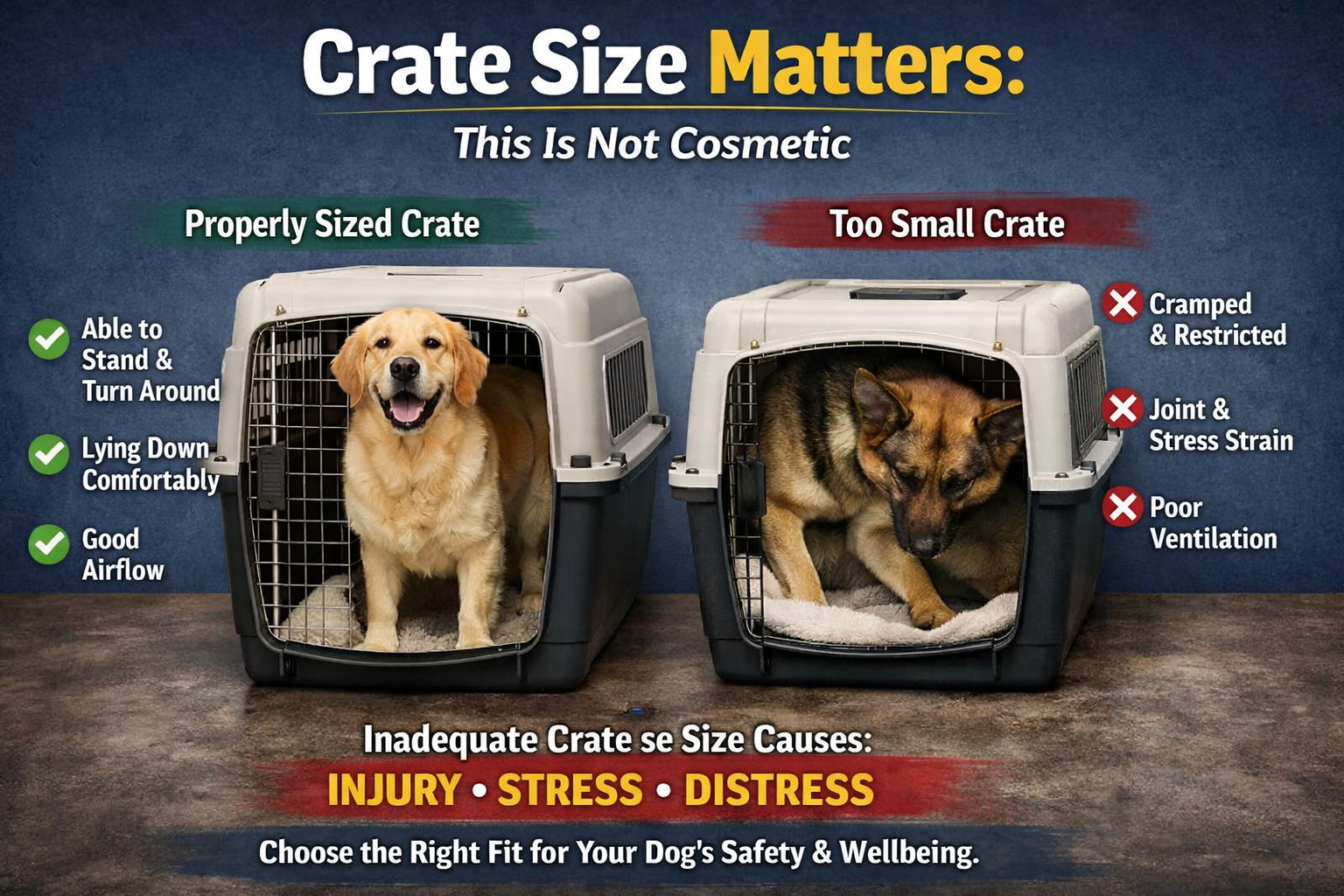
A properly fitted crate must allow your dog to:
Stand at full height without spinal compression
Turn around without restriction
Lie down fully extended
Maintain adequate airflow
When a crate restricts natural posture, it can contribute to:
Joint compression
Circulatory compromise
Muscle tension
Sustained cortisol elevation
Chronic exposure to inescapable stressors has been linked to behavioural shutdown and learned helplessness (Seligman, 1972), which can present outwardly as “calm” but is actually a stress response.
It is critical to understand that shutdown is not calmness or relaxation. It is a stress response characterized by behavioural inhibition after repeated unsuccessful attempts to cope or escape.
In air travel, inadequate crate sizing also increases the risk of injury during turbulence or handling.
Crate selection must be based on your dog’s skeletal structure and natural resting posture — not on vehicle space or convenience.
Your job as a responsible owner is to ensure your dog is physically safe and comfortable—at all times—especially in high-stress conditions.
Environmental Awareness: Your Dog Is Not an Accessory
Handler awareness significantly influences canine stability.
I observed multiple handlers moving forward while their dogs lagged, hesitated, or attempted avoidance. Others were distracted by phones while their dogs navigated carts, luggage wheels, and heavy foot traffic.
Dogs are highly attuned to environmental pressure. If the handler does not regulate pace, space, and exposure, the dog absorbs the intensity.
These are handler awareness issues.
If you are confidently moving forward while your dog is bracing, hesitating, or lowering their body posture, your dog is not “being stubborn.”
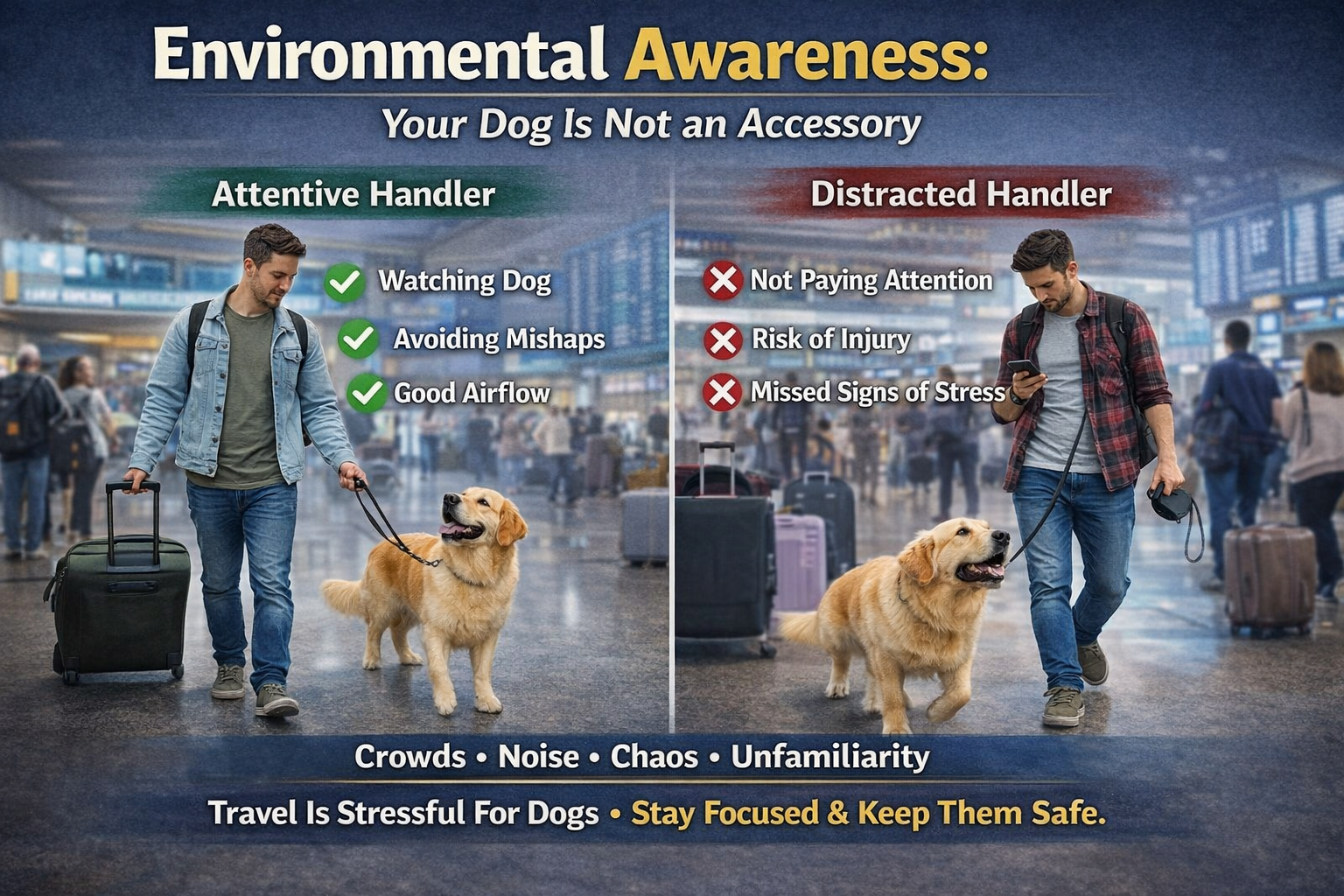
Their nervous system is in overdrive.
It is your responsibility to notice and adjust. Environmental management includes:
Slowing movement when arousal rises
Creating physical space from pressure
Providing predictable structure
Removing the dog from overwhelming stimuli when necessary
A dog moving through a crowded airport is not an accessory to a travel itinerary.
They are a sentient nervous system navigating complexity.
Public Interaction: Consent Is a Behavioural Safeguard (Advocate for Your Dog)
Travel places your dogs in direct proximity to strangers. And strangers often assume access.
Another pattern I observed repeatedly: strangers touching dogs without asking.
Equally concerning: handlers allowing it without assessing their dog’s comfort.
Dogs do not owe the public engagement.
High-stimulation environments already elevate baseline arousal (Beerda et al., 1998).
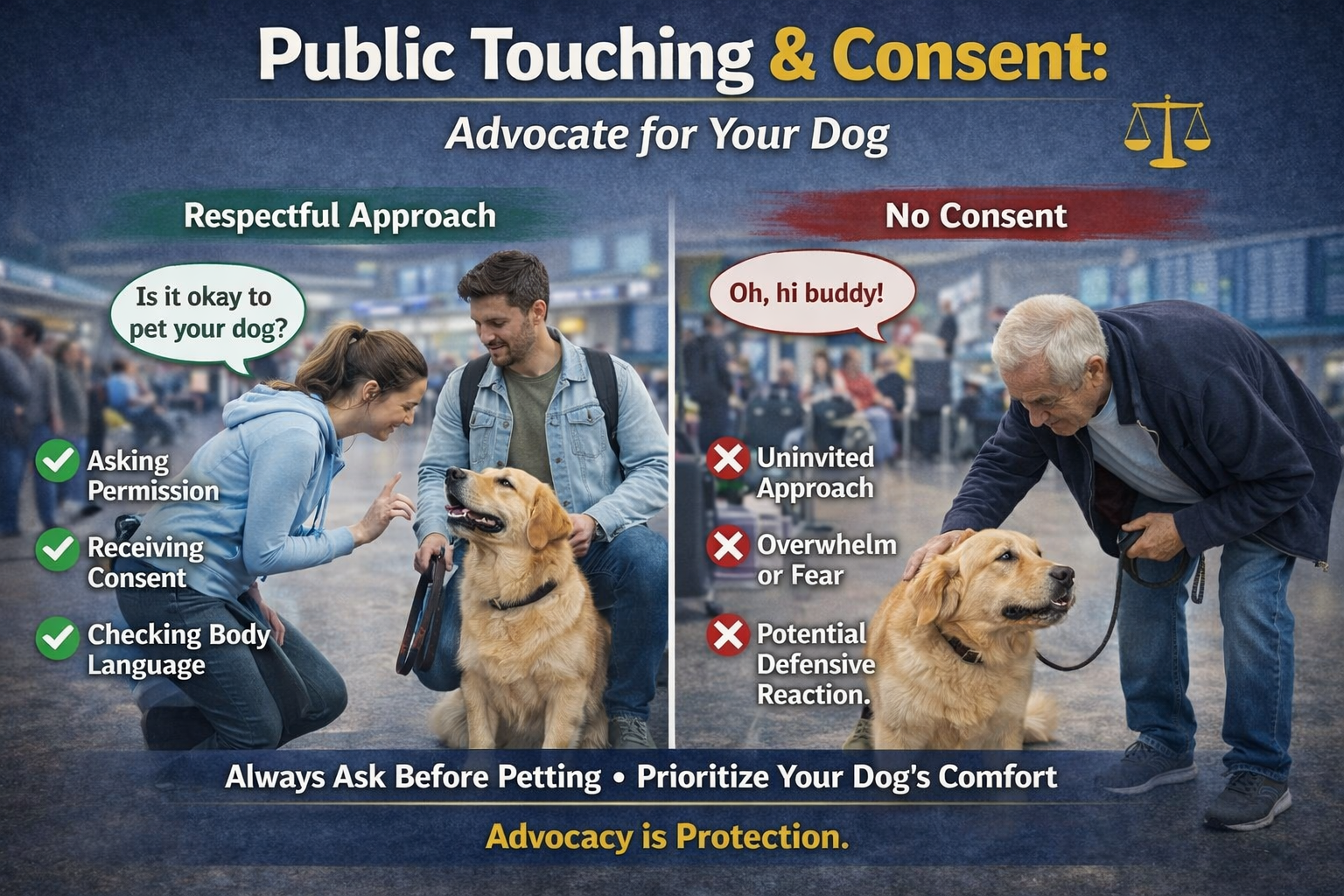
Unsolicited touch can:
Trigger defensive reflexes
Push a dog over threshold
Create negative social associations
Increase cortisol
Contribute to stress stacking
Erode trust between dog and handler
Repeated stress exposure without recovery reduces behavioural resilience (McEwen, 2007).
Advocacy is not optional. It is protective leadership, a behavioural safeguard.
Advocacy means:
Blocking physical access, positioning your body between your dog and a stranger
Using clear verbal boundaries (“No, thank you.”)
Monitoring micro-signals before permitting interaction (watching your dog’s body language)
Ending interaction immediately at signs of discomfort (withdraws, stiffens, or turns away)
Even if you grant permission, your dog must also grant permission.
Signals of non-consent may include:
Head turning away
Weight shifting backward
Stiffening
Lip compression
Avoidance behaviours
Respecting these signals preserves behavioural stability.
Ignoring them increases the risk of reactivity.
Your role is not to facilitate public access.
Your role is to protect your dog’s emotional safety.
Hotel Rooms & Isolation Stress (Leaving Dogs for Extended Periods)
Novel environments elevate physiological activation (Hennessy et al., 1997). Even confident dogs experience heightened physiological activation during travel.
A hotel room may appear calm to a human. To a dog, it lacks predictability and familiar scent markers while being filled with new sounds and scents.
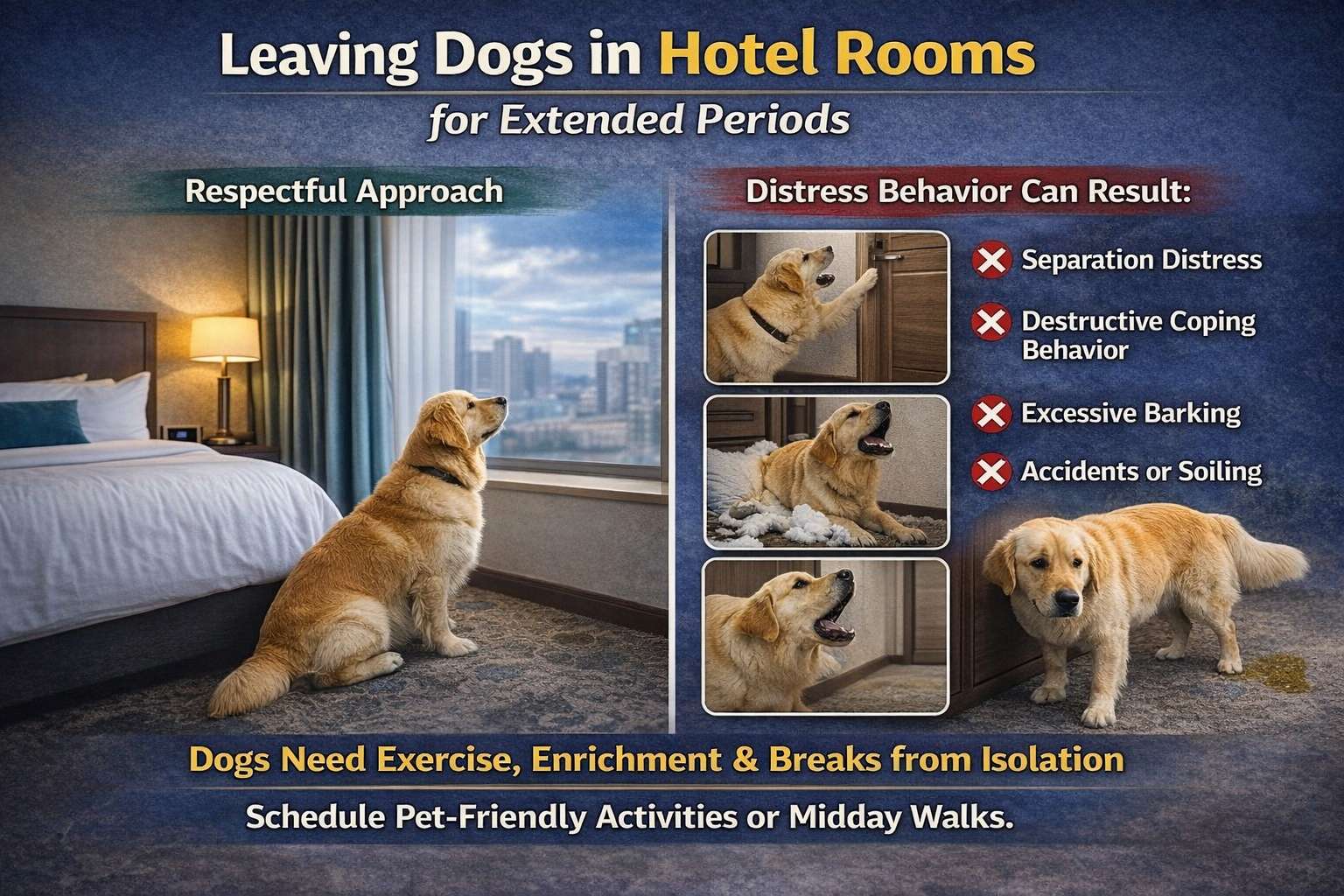
Leaving a dog alone in a hotel room for most of the day—without sufficient exercise, enrichment, and decompression—is not responsible management. This increases the risk of:
Separation distress
Panic behaviours
Excessive vocalization
Destructive coping
Elimination accidents
Isolation layered onto elevated arousal compounds stress load — a process consistent with cumulative stress theory (Moberg, 2000; McEwen, 2007).
Environmental deprivation and confinement stress have been shown to negatively impact canine welfare (Wells, 2004).
If your itinerary involves long outings where your dog cannot safely accompany you, ethical planning includes:
Structured exercise prior to departure
Mental enrichment strategies
Midday support
Hiring qualified pet care when necessary
Adjusting itineraries to include pet-friendly activities
If those accommodations are not feasible, boarding with a trusted caregiver may be the more responsible choice.
Travel should not come at the expense of behavioural regression or compromise behavioural stability.
Bringing your dog on vacation does not automatically mean they enjoy or benefit from your vacation schedule.
Their needs still come first
Retail Environments: Spatial Risk & Handler Competence
Even outside travel, I continued to observe similar issues and patterns in stores.
Dogs being:
Bumped by shopping carts
Stepped on
Pulled behind distracted handlers
Overstimulated in tight aisles
Retail environments are not designed with canine spatial awareness in mind.
Dogs experience carts as fast-moving obstacles at eye level.
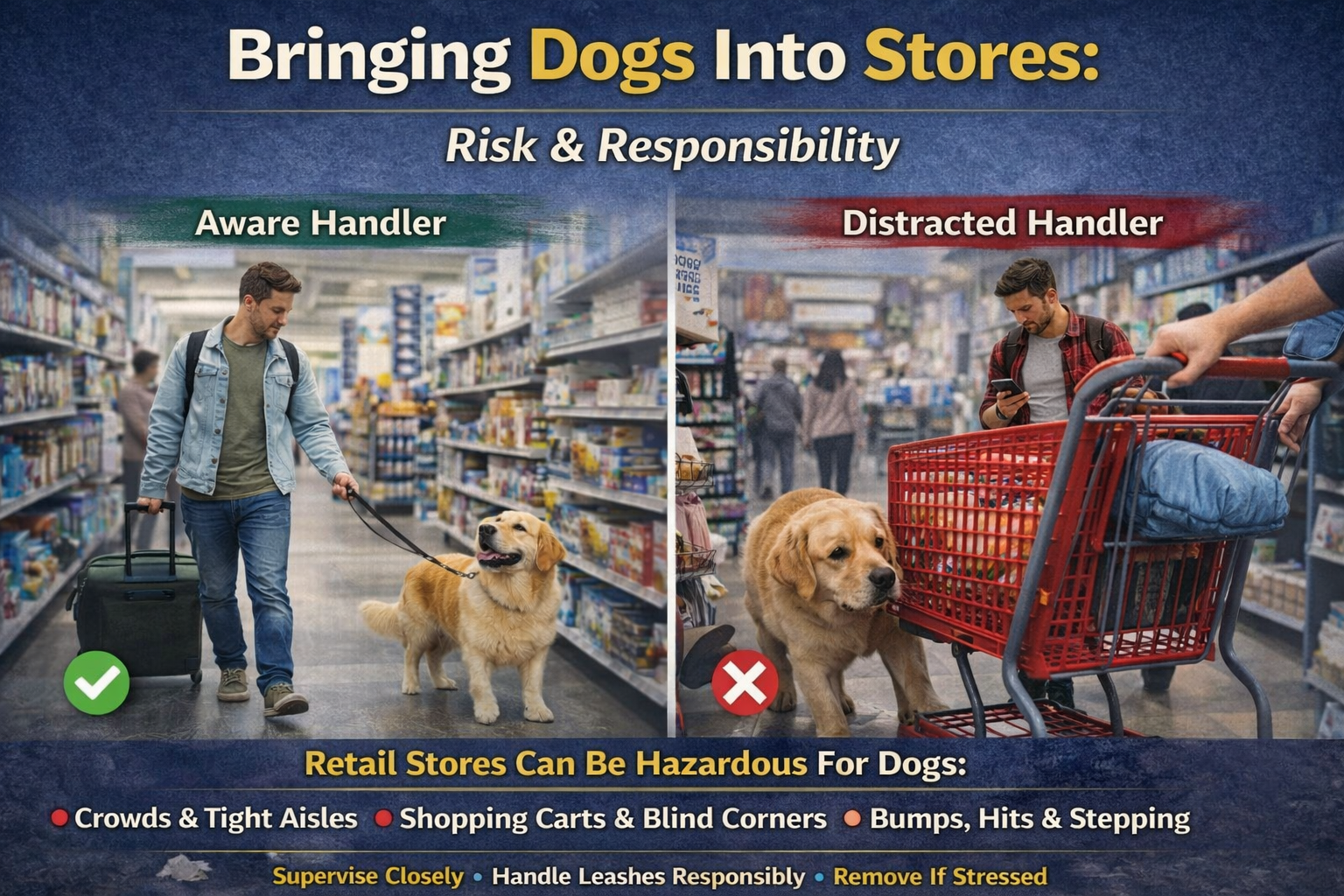
When bringing your dog into stores:
Keep leash length short and controlled
Position them at your side, not behind you or trailing behind
Monitor blind corners
Watch wheel movement
Monitor for stress signals
Remove immediately if they become overstimulated (arousal escalates)
Public access is not a universal entitlement.
It is appropriate only for dogs who are environmentally neutral and handlers who are situationally aware.
It is a privilege dependent on:
Training
Emotional stability
Environmental neutrality
Handler competence
Exposure without readiness does not build resilience.
It builds overwhelm.
If your dog is reactive, anxious, or environmentally sensitive, retail environments are not appropriate training grounds.
Exercise, Stimulation & Regulation Are Non-Negotiable
Travel changes and disrupts routine and location.
It does not change your dog’s biological need.
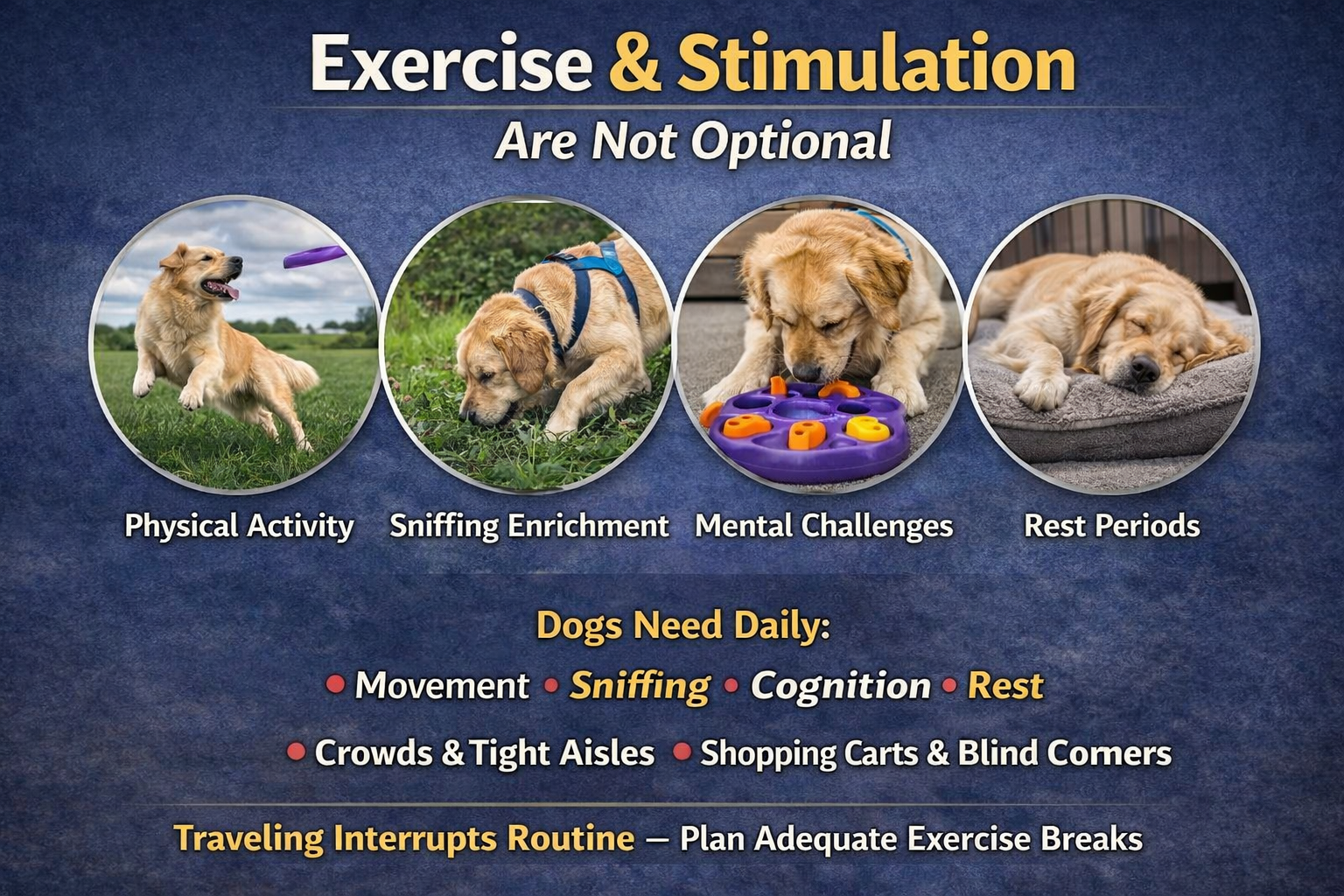
Olfactory engagement has been associated with positive welfare effects and stress reduction in dogs (Wells, 2004; Horowitz, 2016).
Dogs require daily:
Cardiovascular movement
Sniff-based exploration (olfactory regulation lowers heart rate)
Cognitive engagement
Deep rest cycles
Without these, arousal rises and behavioural thresholds lower (Moberg, 2000).
A tired dog is not necessarily a regulated dog or physically exhausted.
A regulated dog has had their nervous system needs met; they are mentally and physically fulfilled.
Maintaining structure during travel is not excessive — it is one of the most powerful preventative behavioural care (management) strategies you can implement.
Before You Travel: A Professional Self-Assessment
Repeated exposure to overwhelming environments can produce both short-term stress responses and long-term behavioural fallout (McEwen, 2007).
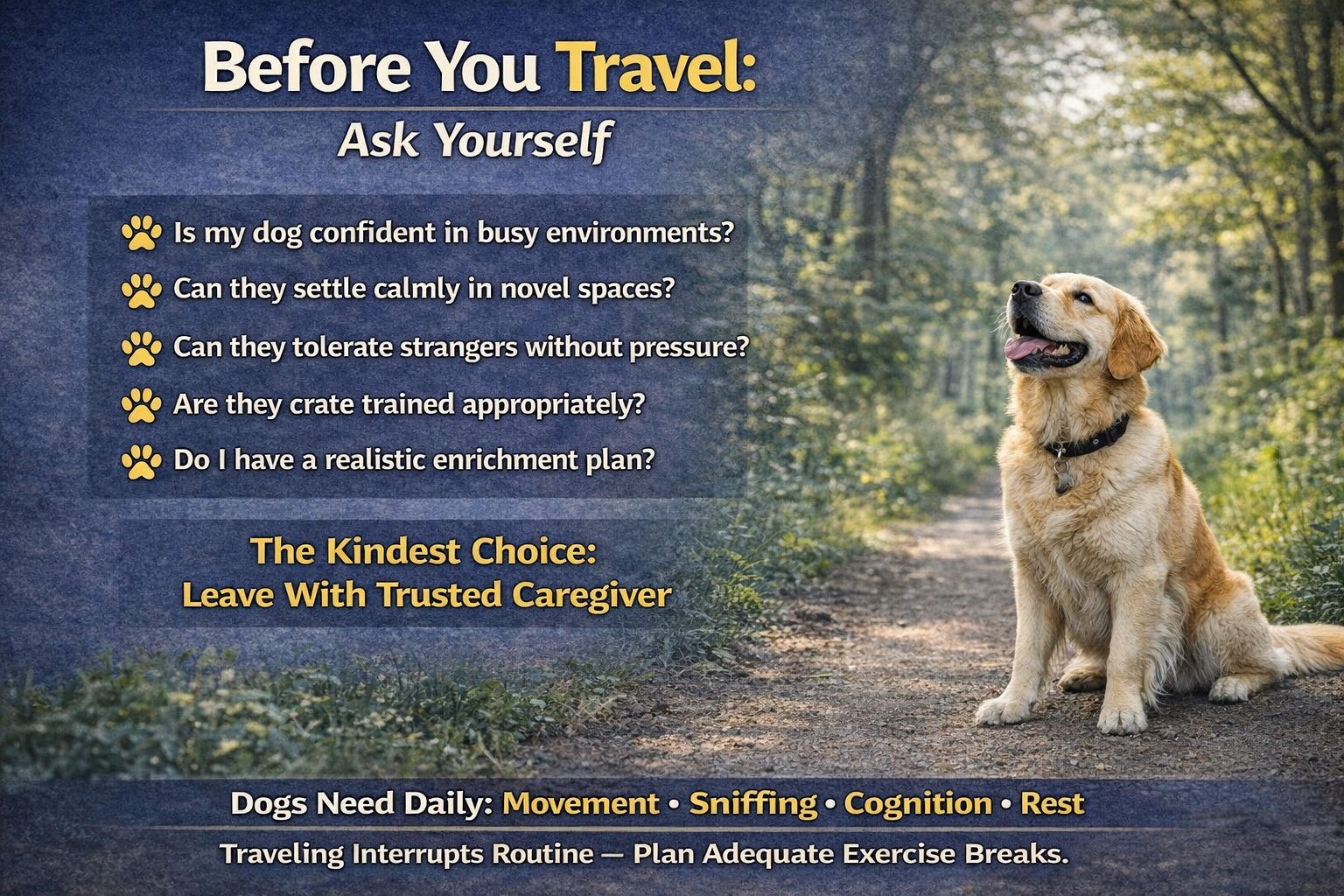
Before bringing your dog on a trip, ask yourself honestly:
Is my dog environmentally confident in high-stimulation environments?
Can they settle calmly in novel, unfamiliar spaces?
Are they crate trained appropriately and without distress?
Can they tolerate strangers without pressure?
Do I have a realistic decompression and enrichment plan?
If the answer is no to any of these, reconsider - it may be kinder to leave them with a trusted caregiver.
Leadership sometimes means recognizing that the trip is for you — not for them. It’s in making the hard decision.
Repeated exposure to overwhelming environments can produce both short-term stress responses and long-term behavioural regression.
Traveling With Your Dog Is a Leadership Test
When we bring dogs into complex human spaces, we are testing and revealing our own competence as handlers.
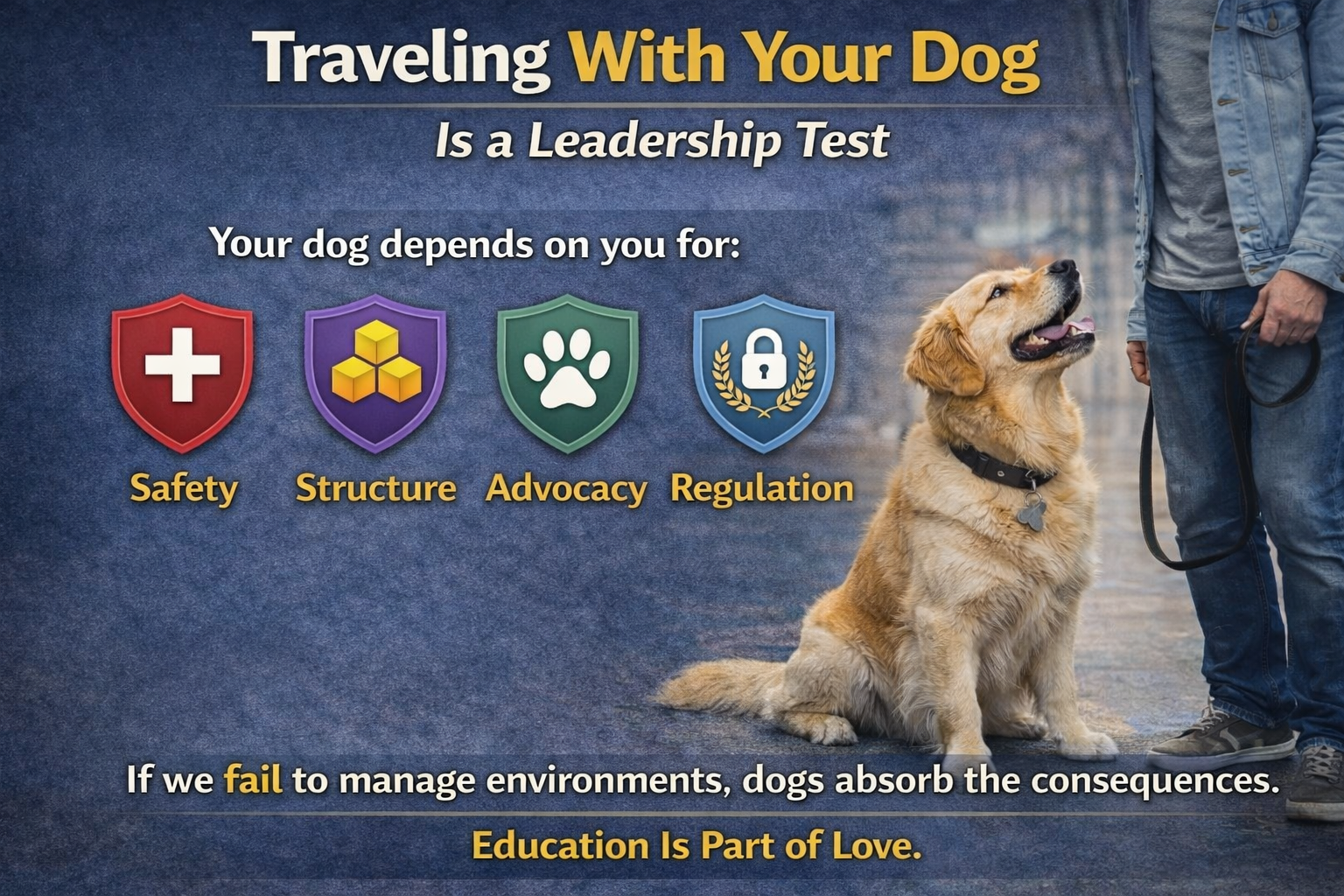
Your dog depends on you for:
Safety
Structure
Regulation
Advocacy
When we fail to manage environments, dogs absorb the consequences physiologically and behaviourally.
Travel can absolutely be enriching when implemented responsibly. I have seen dogs navigate airports calmly, settle beautifully in hotel environments, and move confidently through public spaces.
The difference is not luck or the dog.
It is preparation.
It is education.
It is leadership.
At NayNays Puppers, I teach that behaviour is communication. Travel simply magnifies that communication.
If we choose to bring our dogs into complex human environments, we must meet the ethical and behavioural standard required to do so.
About the Author
Renée Linton is the founder of NayNays Puppers, a behaviour-focused dog training and education company based in Welland, Ontario.
With a strong foundation in canine behaviour science, nervous system regulation, and positive reinforcement methodology, Renée specializes in helping dog owners understand the why behind behaviour — not just the obedience outcome.
Her work emphasizes advocacy, ethical leadership, and creating emotionally stable dogs through structure, enrichment, and education.
Through in-person training, digital education programs, and the “Think Like a Monster Pup” framework, Renée teaches that behaviour is communication — and responsible ownership starts with understanding biology.
Train. Treat. Repeat.
References & Supporting Research
This article reflects current understanding in canine stress physiology, behavioural neuroscience, and welfare-based training practices.
Beerda, B., Schilder, M. B. H., van Hooff, J. A. R. A. M., de Vries, H. W., & Mol, J. A. (1998). Behavioural, saliva cortisol and heart rate responses to different types of stimuli in dogs. Applied Animal Behaviour Science, 58(3–4), 365–381.
https://doi.org/10.1016/S0168-1591(97)00145-7
Hennessy, M. B., Davis, H. N., Williams, M. T., Mellott, C., & Douglas, C. W. (1997). Plasma cortisol levels of dogs at a county animal shelter. Physiology & Behavior, 62(3), 485–490.
https://doi.org/10.1016/S0031-9384(97)80328-9
Joëls, M., Pu, Z., Wiegert, O., Oitzl, M., & Krugers, H. (2006). Learning under stress: How does it work? Trends in Cognitive Sciences, 10(4), 152–158.
https://doi.org/10.1016/j.tics.2006.02.002
McEwen, B. S. (2007). Physiology and neurobiology of stress and adaptation: Central role of the brain. Physiological Reviews, 87(3), 873–904.
https://doi.org/10.1152/physrev.00041.2006
Moberg, G. P. (2000). Biological response to stress: Implications for animal welfare. In G. P. Moberg & J. A. Mench (Eds.), The biology of animal stress: Basic principles and implications for animal welfare (pp. 1–21). CABI Publishing.
https://doi.org/10.1079/9780851993591.0001
Seligman, M. E. P. (1972). Learned helplessness. Annual Review of Medicine, 23, 407–412.
https://doi.org/10.1146/annurev.me.23.020172.002203
Wells, D. L. (2004). A review of environmental enrichment for kenneled dogs, Canis familiaris. Applied Animal Behaviour Science, 85(3–4), 307–317.
https://doi.org/10.1016/j.applanim.2004.04.002
Horowitz, A. (2016). Being a dog: Following the dog into a world of smell. Scribner.
https://www.simonandschuster.com/books/Being-a-Dog/Alexandra-Horowitz/9781476796005